
Hantavirus 101: Symptoms, Risks, and Prevention in 2026
While the recent cruise ship outbreak has dominated headlines, hantavirus remains a persistent seasonal threat in both rural and urban environments. Recent 2026 reports from San Diego, California, and New Taipei City, Taiwan, remind us that rodent-borne diseases can appear anywhere.
Understanding the Disease
Hantaviruses typically cause two distinct clinical syndromes depending on the region and the specific virus strain:
- Hantavirus Pulmonary Syndrome (HPS): Common in the Americas. It begins with "flu-like" symptoms but can rapidly progress to severe respiratory failure.
- Hemorrhagic Fever with Renal Syndrome (HFRS): More common in Europe and Asia, primarily affecting the kidneys.
How It Spreads
Most people contract the virus through "aerosolization." This happens when dust contaminated with rodent urine, droppings, or saliva is stirred up and inhaled.
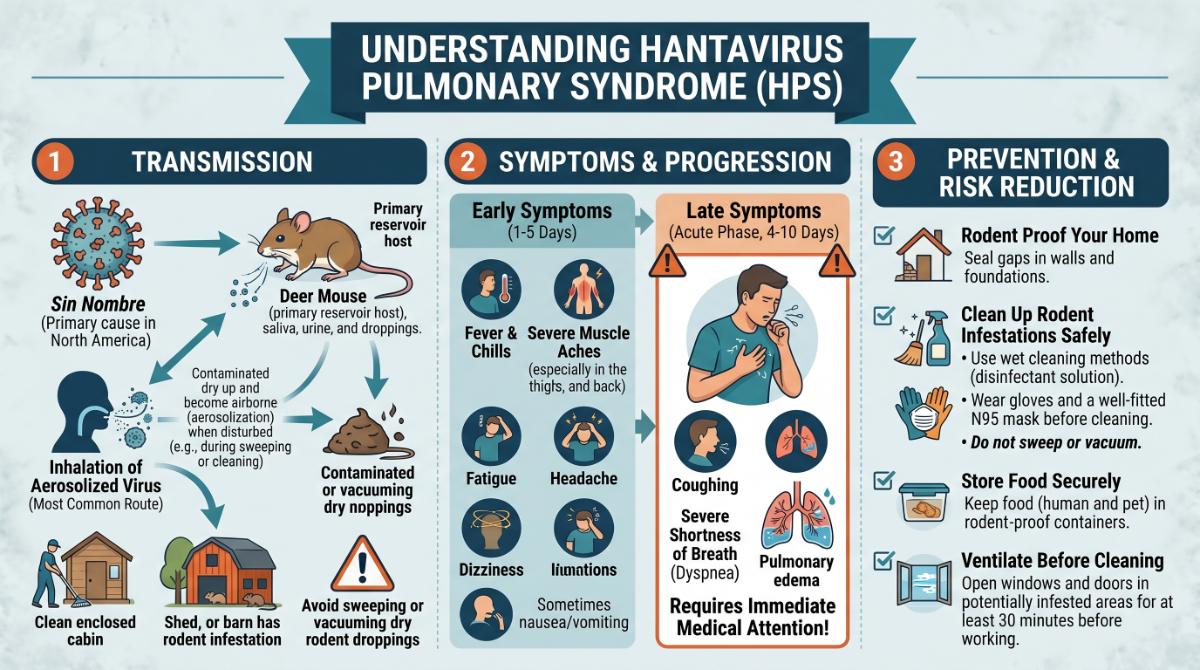
Important Note: You do not need to be bitten by a rodent to get sick. Simply breathing in the air in a shed, cabin, or storage unit where mice have nested is the most common route of infection.
Prevention and Safety Tips
Health officials from the CDC recommend these steps to minimize risk during "spring cleaning" or when entering long-closed buildings:
- Ventilate First: Open doors and windows for at least 30 minutes before entering a potentially infested area.
- Do Not Sweep or Vacuum: Sweeping kicks the virus into the air. Instead, use a disinfectant or a mixture of bleach and water to soak the area.
- Wear Protection: If you are cleaning a heavily infested area, use gloves and a well-fitted N95 mask.
- Seal the Entry: Patch holes in your home larger than a 1/4 inch (the size of a pencil) to keep rodents out.
If you develop a high fever, deep muscle aches, or shortness of breath after being in contact with rodent habitats, seek medical attention immediately and mention your exposure.